
How to Cook Steak in Cast Iron
Build a strong crust while controlling the interior.
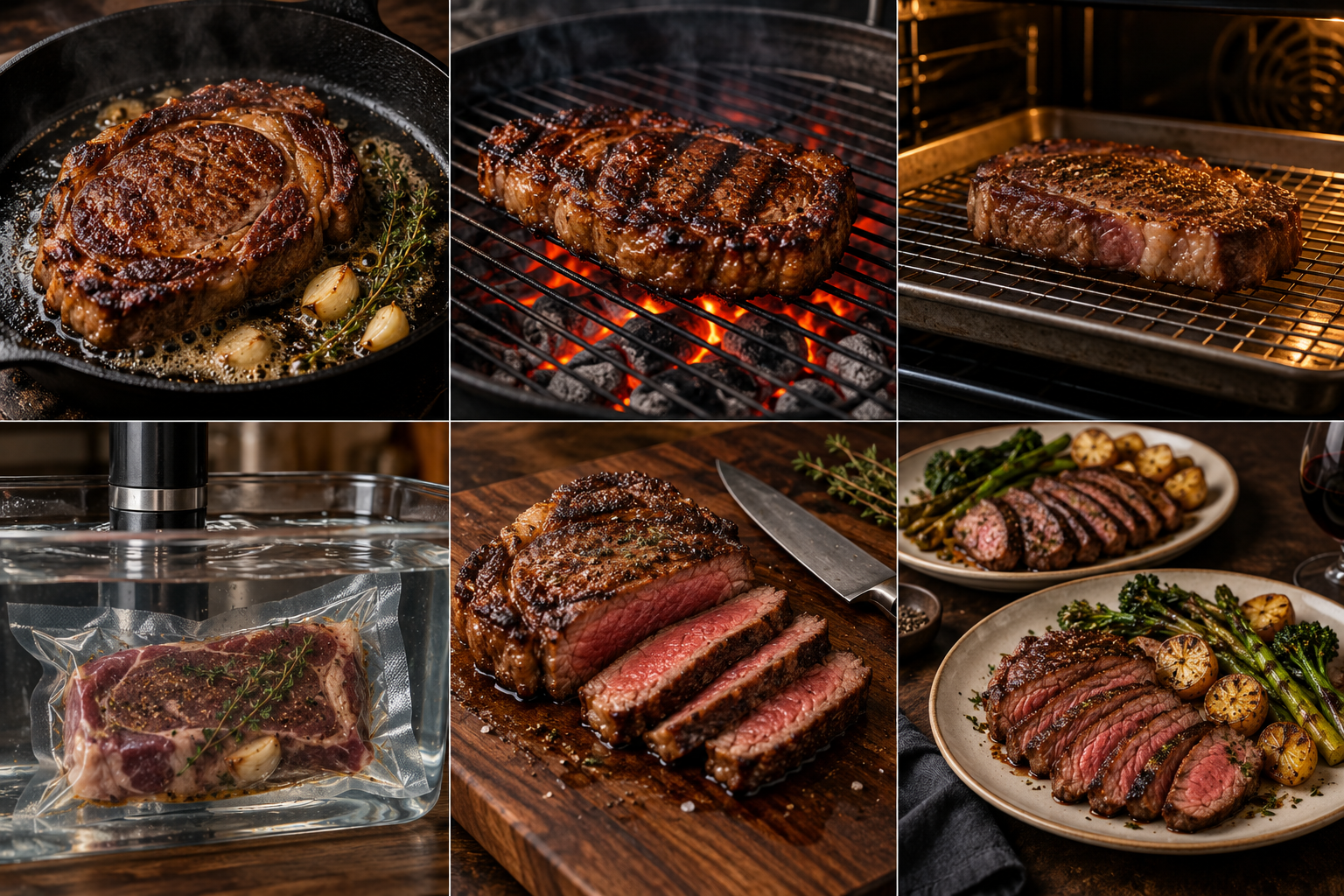
Before you start
A good skillet steak is about surface contact and heat control. A heavy pan helps maintain heat, but a wet steak or an overcrowded pan will still struggle to brown. Use this method when your steak fits flat in the skillet and you want a crust without lighting the grill.
Step-by-step method
- Gather the essentials. Use a cast-iron skillet, tongs, paper towels, a small amount of suitable cooking oil and an instant-read thermometer. Have a clean serving plate ready. Open ventilation before preheating; steak searing can create smoke.
- Prepare the steak. Pat the surface dry and season with salt. If you salted ahead, keep the steak refrigerated and dry any new surface moisture before cooking. Remove packaging and deal with silver skin before you start, not while the pan is hot.
- Preheat deliberately. Heat the skillet gradually, then add a thin film of oil. Aim for a pan hot enough to brown the steak promptly, rather than the hottest possible pan. Persistent heavy smoke is a cue to reduce heat, not a sign of better technique.
- Sear with room to spare. Lay the steak away from you to reduce splatter. Cook in batches if necessary. Turn as browning develops; there is no need to follow a one-flip rule. Reposition the steak so it contacts the hottest, cleanest part of the pan.
- Control the center. Begin checking temperature early. If the crust is ready while a thick center is still behind, reduce the burner or finish in a moderate oven using oven-safe equipment. Do not keep burning the outside while waiting for the inside.
- Finish and serve. Butter and delicate herbs can be added late at reduced heat if you want them. Check the center again, follow the temperature and resting guidance, and move the steak to a clean board. Slice across pronounced grain and add sauce at serving.
Choose a cut that suits the method
Choose a reasonably even steak. Strip, flat iron and boneless ribeye are practical options; a thick filet may need an oven finish. Thin skirt portions cook quickly and need a shorter, attentive process. Bone-in cuts can sit awkwardly against the pan, reducing meat contact.
Troubleshooting
| Problem | Likely cause | What to change |
|---|---|---|
| Pale, wet surface | Excess moisture or too many steaks | Dry the next steak and cook fewer pieces at once. |
| Black exterior, underdone center | Too much direct heat for the thickness | Sear less aggressively and use a gentler finishing stage. |
| Burned butter | Butter added while the pan was too hot | Use oil for the main sear; add butter late with reduced heat. |
| Patchy crust | Steak not lying flat or pan heating unevenly | Reposition and check contact instead of pressing constantly. |
Make the method repeatable
A cast-iron skillet is heavy and stays hot long after you turn off the burner. Use a dry mitt for the handle and do not put a hot pan in cold water. Clean according to its seasoning requirements, dry fully, and apply a light coat of oil if needed. A visible film of grease is not the goal.