
How to Grill Steak
A repeatable method for managing heat, browning and doneness.
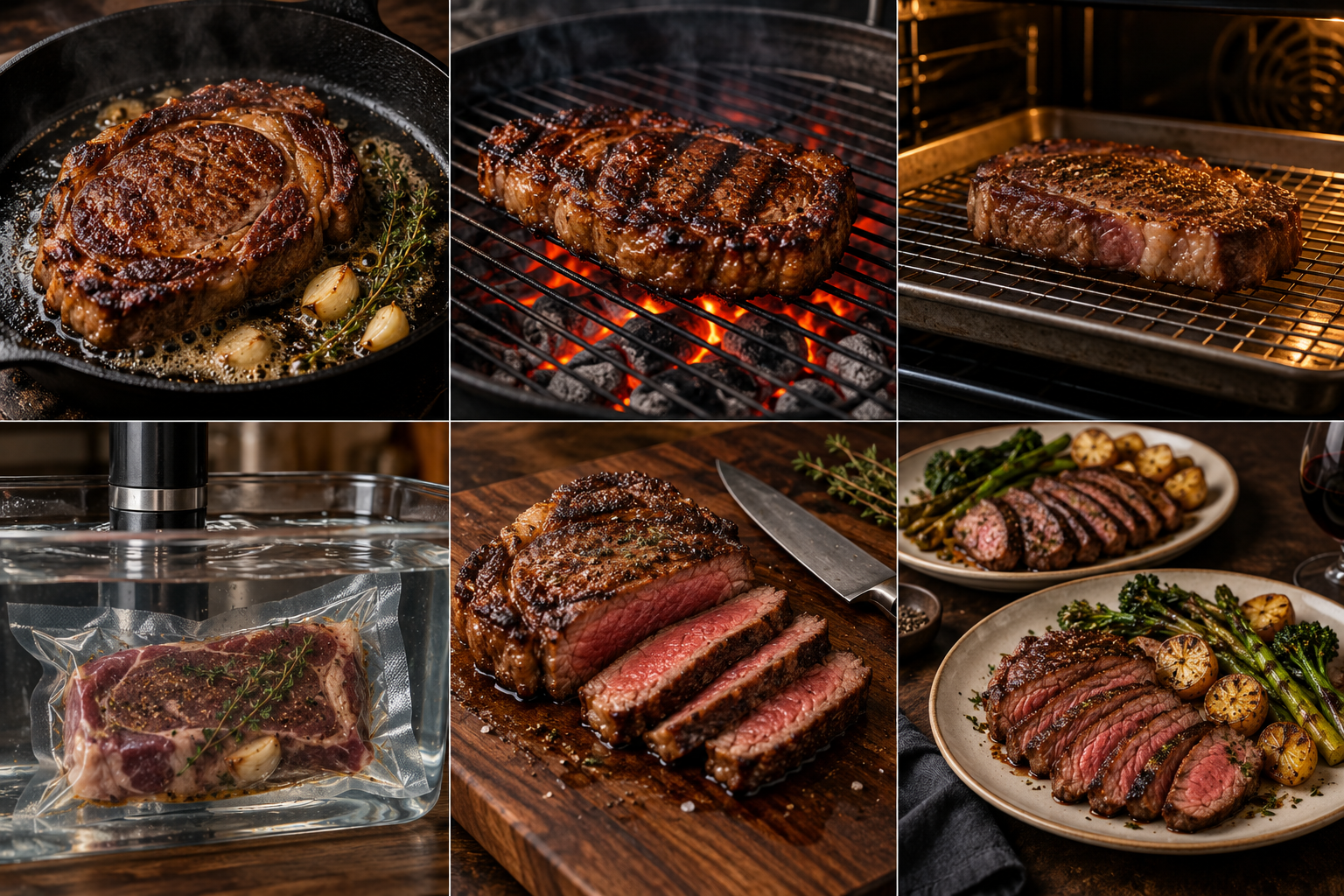
Before you start
The most useful grilling skill is creating a place to sear and a place to finish gently. Two heat zones let you respond to a steak that is browning faster than its center is warming. They also give you somewhere to move fatty cuts when drippings create flare-ups.
Step-by-step method
- Set up two zones. On a gas grill, use stronger heat on one side and lower or no burner heat on the other. With charcoal, bank the coals toward one side. Follow the grill manufacturer’s instructions and leave enough open grate space to move the steak.
- Prepare food and tools. Dry and season the steak. Keep raw-meat utensils separate from the clean serving plate. Put the thermometer, tongs and a tray close enough to reach safely; avoid leaving the grill while the steak is over direct heat.
- Preheat and clean. Preheat with the lid as appropriate for your grill, then clean the grates with a suitable tool. Check for loose brush bristles before adding food. Grill temperature displays describe air near their sensor, not the exact heat where the steak touches.
- Build the crust. Sear over the hotter zone, turning and moving as needed. Grill marks are cosmetic; do not sacrifice temperature control to obtain a perfect crosshatch. Avoid repeated puncturing with a fork and keep fatty edges away from persistent flames.
- Finish away from fierce heat. Move a thick steak to the cooler zone when browning is sufficient. Close the lid when appropriate to provide gentler surrounding heat. Measure the thickest center and check irregular steaks in more than one place.
- Rest and carve. Follow the temperature guide and use a clean plate or board. If cooking for a group, check every steak separately: identical-looking pieces may not finish together. Slice across the grain and serve the finished steaks promptly.
Choose a cut that suits the method
Ribeye and strip are straightforward grill choices; skirt and flank work well when you have a clear slicing plan. A porterhouse needs separate temperature checks for the strip and tenderloin. Very thin steaks leave little margin for a long indirect phase, while thick tomahawks need space and controlled finishing heat.
Troubleshooting
| Problem | Likely cause | What to change |
|---|---|---|
| Flames engulf the meat | Fat drips onto the heat source | Move to the cooler zone; do not let soot-blackened flames become the sear. |
| One steak cooks much faster | Hot spots or different thickness | Rotate positions and measure each steak. |
| Exterior done, center behind | Direct heat used too long | Finish indirectly with the lid as appropriate. |
| No useful crust | Wet steak or inadequate preheating | Dry the surface and let the grill recover between batches. |
Make the method repeatable
Marinate in the refrigerator and pat the steak dry before grilling. Sugary sauces can scorch, so reserve them for an appropriate late stage or serve them separately. Do not return cooked steak to the raw-meat plate. Keep a clean sauce for serving rather than reusing raw marinade as a finishing sauce.