
How to Rest and Slice Steak
Finishing technique matters: rest appropriately and slice with the grain in mind.
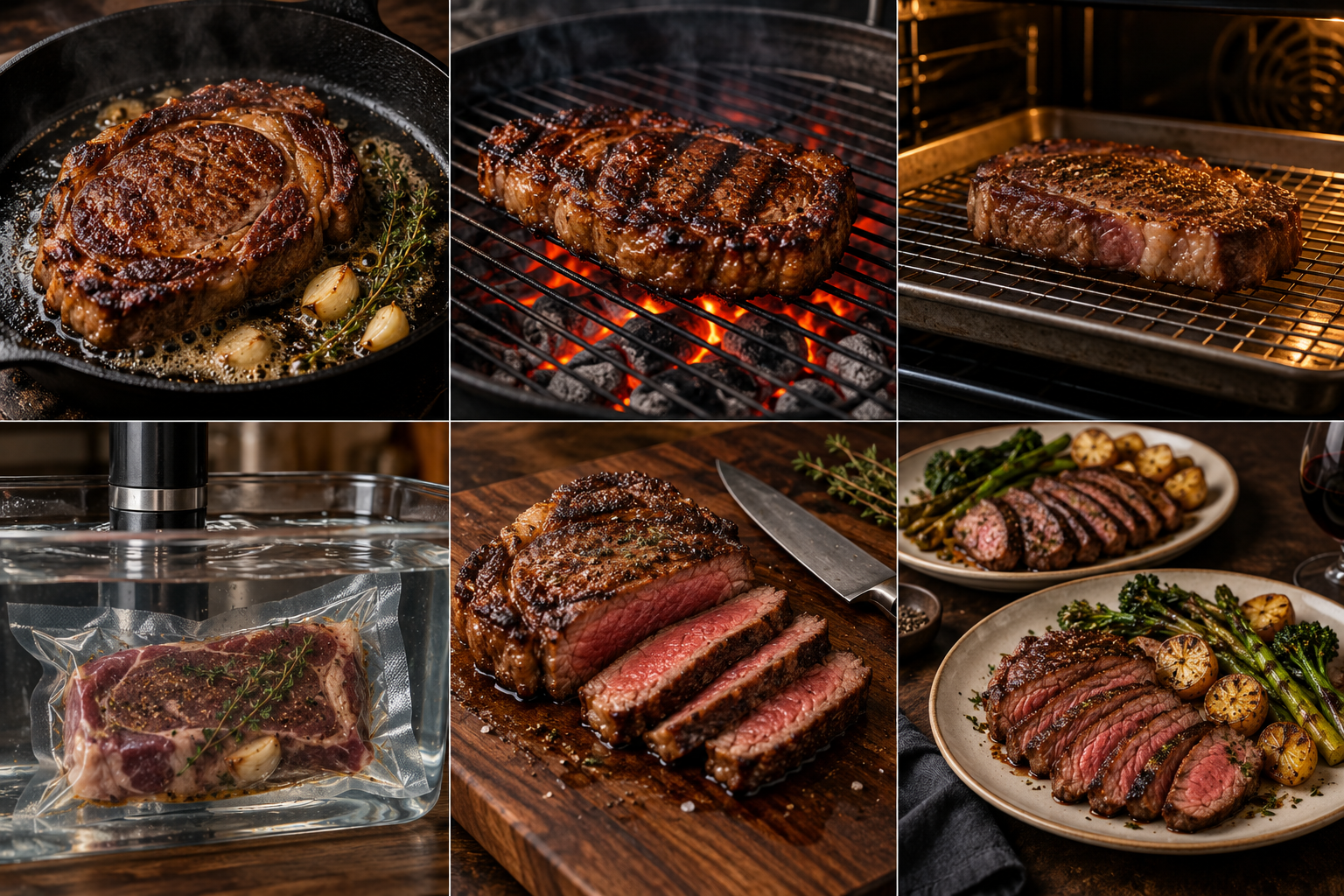
Before you start
The last few minutes determine whether a well-cooked steak reaches the table as a useful meal. Resting gives you time to organize the serving, while correct slicing shortens the muscle fibers you have to chew. Neither step repairs a steak that was cooked far beyond its intended endpoint.
Step-by-step method
- Prepare a clean station. Have a clean board, sharp knife and serving plate ready before the steak comes off the heat. Replace any board or utensils that contacted raw beef. Make the side dishes and sauce ready so the steak does not sit indefinitely.
- Check temperature first. Confirm the required cooking temperature and use the relevant resting guidance. For USDA’s whole-steak recommendation, rest at least three minutes after reaching 145°F before removal from heat. A rest is not a replacement for that temperature.
- Rest without trapping excessive heat. A warm plate can keep service comfortable. If you loosely tent foil, recognize that the covering can soften the crust and change carryover. Do not tightly wrap a finished steak simply because a fixed resting time says to wait.
- Identify the grain. Look for the direction of the muscle fibers. It is particularly clear on flank and skirt. If the cooked crust makes it hard to see, inspect the edge or remember the grain direction you observed before cooking.
- Separate mixed cuts. For porterhouse or T-bone, remove the strip and tenderloin from the bone and slice them independently. A single cutting direction may not suit both muscles. For hanger, ensure the tough central membrane was removed before serving.
- Carve and serve. Cut across the fibers, using thinner slices for prominently grained cuts. Arrange the slices and spoon over sauce if desired. Keep the sharp knife stable and avoid sawing with a dull edge that shreds the crust.
Choose a cut that suits the method
For a shared platter, carve only what is about to be served. Thin slices cool faster than a whole steak. A large ribeye can be carved into portions after removing unwanted fat, while a filet may simply be served whole. There is no rule that every cut must become thin strips.
Troubleshooting
| Problem | Likely cause | What to change |
|---|---|---|
| Steak seems chewy despite accurate temperature | Sliced along the grain | Rotate and make cross-grain slices. |
| Crust becomes soft | Tightly wrapped or sitting in liquid | Use a loose covering if needed and avoid excess pooled liquid. |
| Steak arrives cool | Serving station or sides not ready | Prepare plates and sides before cooking finishes. |
| Different pieces feel different | Mixed muscles or inconsistent slice thickness | Separate muscles and use a consistent carving plan. |
Make the method repeatable
Save leftovers promptly in suitable shallow containers under current food-safety guidance. Plan a second use such as sandwiches or a rice bowl; repeatedly reheating the same portion can damage texture. Never judge whether leftovers are safe solely by their smell or the color of the meat.