
Sous Vide Steak Guide
Precision temperature control followed by an aggressive finishing sear.
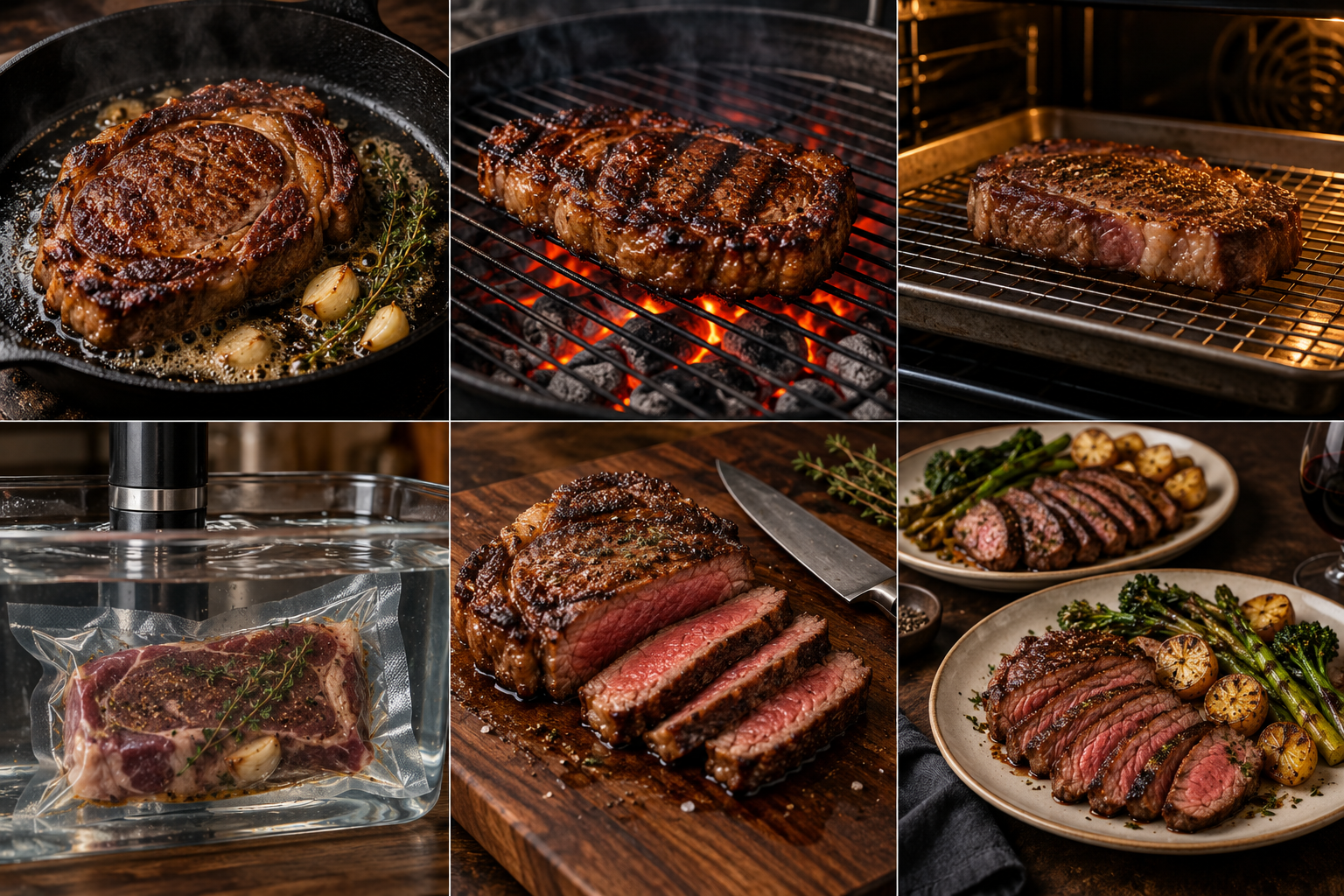
Before you start
Sous vide separates temperature control from browning by cooking food in a temperature-controlled water bath, then searing it. That can be useful for thick portions, but bath temperature alone is not a complete safety plan. Time, thickness, handling and whether you chill the food also matter.
Step-by-step method
- Use a validated method. Choose a tested time-and-temperature schedule suited to the steak thickness and your equipment. This page is a workflow guide, not a pasteurization table. A culinary doneness setting does not automatically establish that the food has been held long enough to be safe.
- Set up the bath. Use a stable container, a suitable circulator and the manufacturer’s minimum and maximum water levels. Keep the appliance positioned safely and make sure the bath can circulate around the bags without obstruction.
- Package appropriately. Use bags specifically suitable for the cooking conditions. Keep seams and closures clean. Arrange the steak so it can heat evenly; several portions stacked tightly together behave differently from a single flat portion.
- Monitor the cook. Confirm the actual bath temperature and keep the bags submerged as the method requires. Check water levels on longer cooks. A floating bag or a stopped circulator is a process problem to resolve, not something to ignore until dinner.
- Dry before searing. Remove the steak from the bag, discard the liquid as appropriate, and dry the surface thoroughly. Wet meat needs extra time to evaporate moisture before it can brown. Preheat the finishing skillet or grill first so the sear can be brief.
- Finish or chill correctly. If serving immediately, sear, verify the result and use a clean serving plate. If storing for later, use a validated rapid-chilling and refrigerated-storage procedure. Do not leave a sealed warm bag on the counter and assume the package makes it safe.
Choose a cut that suits the method
A thick filet or strip is easier to manage in this workflow than a very thin skirt steak. You still need a useful finishing surface: a powerful bath does not produce browning. If you are new to steak, an instant-read thermometer and a controlled pan method may be a simpler starting point.
Troubleshooting
| Problem | Likely cause | What to change |
|---|---|---|
| Poor crust | Surface still wet after the bath | Dry thoroughly before a short, hot sear. |
| Final steak overcooked | Sear too long or steak too thin | Use less finishing time and check the center. |
| Bag floats | Air or poor arrangement | Follow the equipment and bag instructions to keep food submerged. |
| Unsure whether the cook was safe | Only bath temperature considered | Use a validated schedule that includes time and thickness. |
Make the method repeatable
Keep a record of thickness, bath setting, cooking duration and finishing method. Avoid treating every internet recipe as a verified safety schedule. In particular, low-temperature cooks and cook-chill storage need more than a screenshot of a doneness chart.