Filet Mignon Guide
Exceptionally tender, lean and best handled with precision.
At a glance
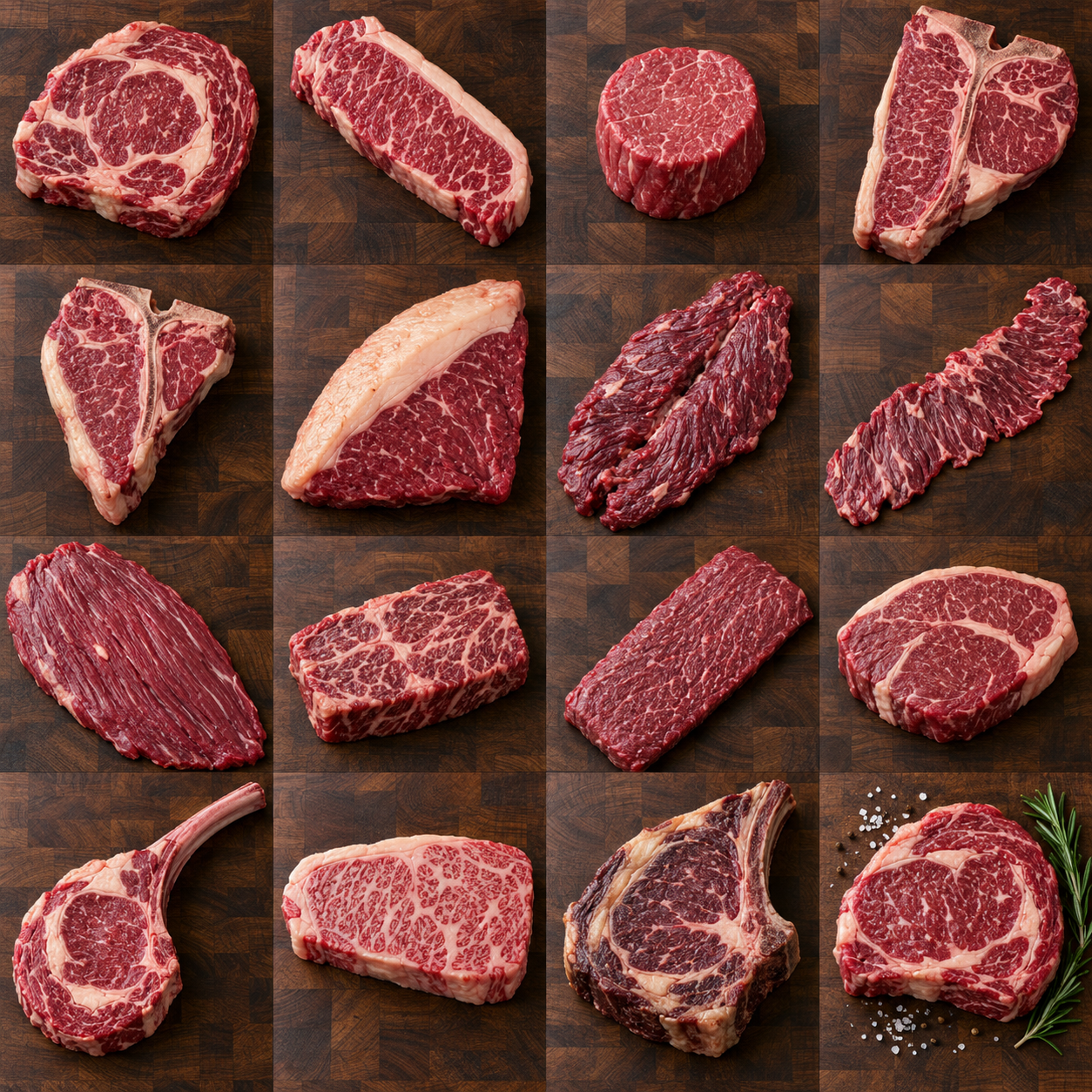
Filet is a portion of the tenderloin. Its appeal is tenderness and a compact shape, not the extensive marbling of ribeye. A large filet can look deceptively small because it is thick. Tenderloin tails and irregular pieces may still taste good, but they will cook less evenly than a center-cut medallion.
Buying
Ask for comparable thickness if you are cooking several filets together. Remove tough silver skin if it has not been trimmed. If a seller wraps filet in bacon, count that as a different cooking problem rather than assuming the bacon and beef will finish together.
Cooking
Start with a dry surface. Sear the flat faces, then use lower heat or an oven to bring a thick center to temperature. Turn or reposition as needed to brown the sides. Tie an irregular medallion with food-safe butcher’s twine only when it genuinely helps it hold an even shape.
Avoid this: Filet has little room for careless overheating. Do not rely on its browned surface to tell you the center is done. For more flavor, make a pan sauce or add compound butter at serving instead of extending a hot sear after the center has finished.
Check the center with a thermometer and use the doneness chart. Choose cast iron, grilling or reverse sear to suit the steak’s thickness.
Alternatives
Choose properly trimmed flat iron when you want a tender bite with stronger beef flavor and potentially better value. Read the Flat iron guide and compare current prices for similar weight and trim.
Keep exploring
KNOW YOUR CUT. WEAR IT.