
Japanese vs. American Wagyu
Different production systems create very different eating experiences.
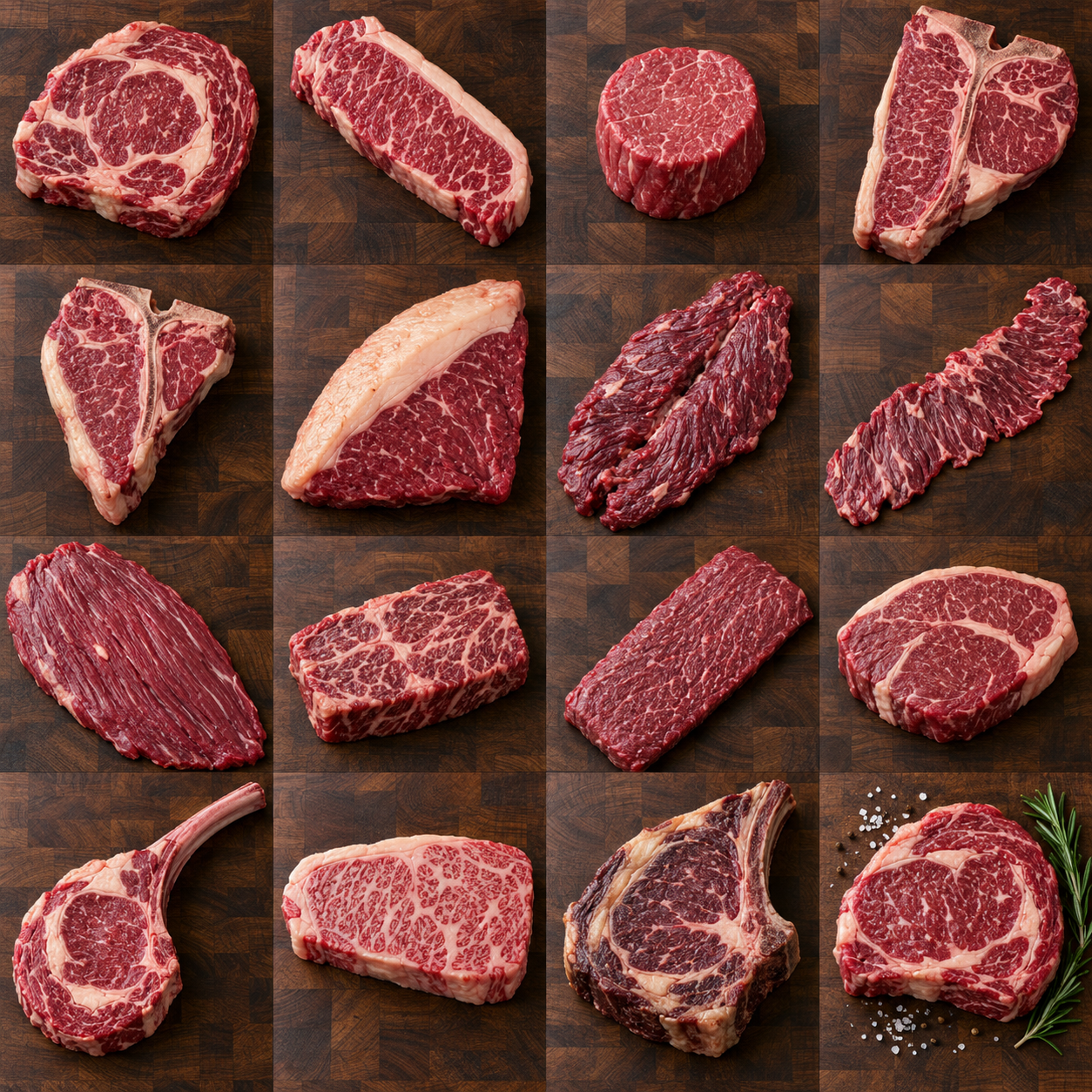
Compare provenance and the actual product
Japanese Wagyu and American Wagyu describe origin and production context, not one universal eating experience. Wagyu cattle can be raised outside Japan, and an American product may involve fullblood or crossbred cattle. Read the seller’s specific explanation rather than assuming the word alone establishes genetics, grade or marbling.
Side-by-side comparison
| Question | First option | Second option |
|---|---|---|
| Origin | Japanese Wagyu: verify Japanese provenance | American Wagyu: verify the U.S. producer and program |
| Label detail | A stated Japanese grade and traceable product | Clear fullblood or crossbred description where claimed |
| Serving decision | Highly marbled portions may suit tasting-size servings | Some products fit a more conventional steak dinner |
| Fair comparison | Same cut, weight and documented grade or marbling | Do not equate different national grading systems |
Which should you choose?
If your goal is a special tasting, look for clearly documented Japanese origin and an explicit grade, then decide how much rich beef you want to serve. If your goal is a substantial steak dinner, evaluate the individual American product on its marbling, portion size and price rather than expecting every package to resemble Japanese A5.
Compare value fairly
Fullblood, purebred and crossbred have distinct meanings in breed registries. They are not just synonyms for premium. A seller should be able to explain its own claim. Do not assume every American Wagyu steak is the same percentage cross, or that every Japanese steak is A5.
Use a clear serving plan before ordering. Bone, heavy exterior fat, unusual portion sizes and shipping can distort a headline price. If possible, compare products on the same date and ask the seller for missing specifications.
How the choice changes cooking
For highly marbled portions, plan a controlled cook and smaller servings, with a dry surface and careful heat management. Do not copy the timing for a thick conventional ribeye onto thin specialty-beef slices. Use the same safe handling discipline and avoid presenting breed or price as a food-safety guarantee.
The name on the package does not establish the center temperature. Check doneness with a suitable thermometer and use the temperature chart to understand the culinary terms and separate safety guidance.