
Wagyu Explained
A clear guide to Wagyu terminology, marbling and buying expectations.
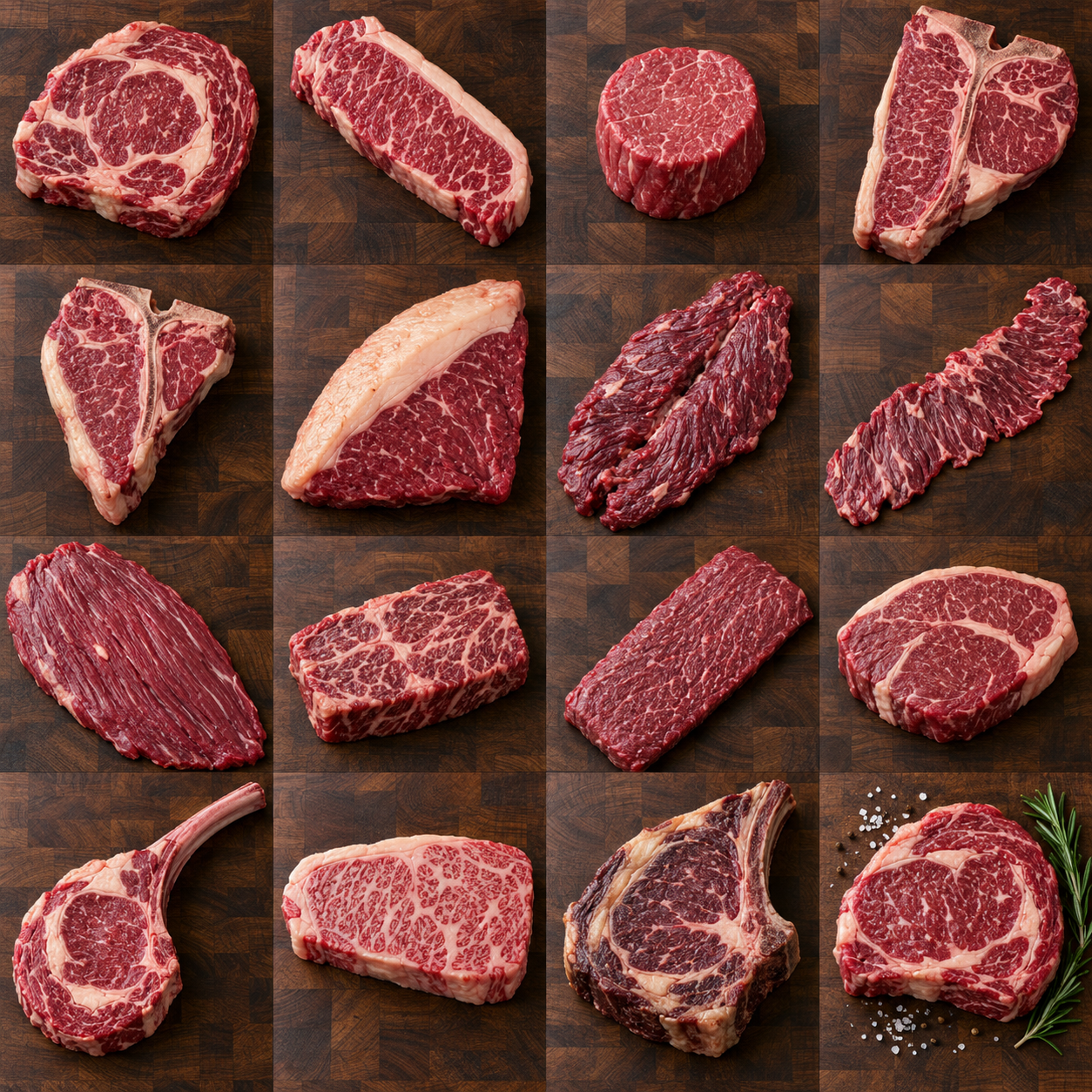
Start with origin, genetics and grading
Wagyu is a cattle-breed term, not a universal promise that every steak will have extreme marbling. A useful listing explains where the beef was produced, what breed or crossing claim is being made, and which grading system or program is relevant.
The same word can appear on very different products: a documented Japanese specialty steak, a U.S. producer’s crossbred beef, or a package with little explanation. Ask what justifies the claim before paying for the label.
A label-reading checklist
| Term or detail | What to ask |
|---|---|
| Country of origin | Where was this beef produced? |
| Fullblood or crossbred | What does the producer mean, and can it substantiate the claim? |
| Japanese grade | What exact grade is stated and what documentation accompanies it? |
| Marbling score | Which scoring system is used, and is it comparable with the alternative? |
| Cut and portion | Is it a conventional steak, thin slices or a tasting portion? |
| Handling | How will it arrive and how should it be stored? |
Do not mix grading systems
Japanese carcass grading and USDA quality grading are different systems. Do not interpret a letter-and-number grade as a direct translation of USDA Prime, or assume a seller’s own marbling scale is interchangeable with an official system. The grading authority and the actual product documentation matter.
In Japanese grading, the letter concerns yield and the number concerns meat quality. Neither part makes the product a cooking instruction. A highly marbled steak still needs a suitable portion, method and safe handling.
Decide how you want to eat it
If you want to explore a very rich product, plan a smaller shared tasting instead of assuming every diner needs a large conventional steak. If you want a full steak dinner, look for the balance of marbling and beef texture that suits you. More richness is not automatically more enjoyment.
Compare total cost and usable weight, and leave room in the menu for the experience you actually want. A purchase made only for a prestigious name may be less satisfying than a clearly specified cut from a producer who answers your questions.
Cooking starts with the actual portion
Thin specialty-beef portions and a thick U.S. steak do not share a universal timer. Dry the surface, prepare a clean serving plate, and control the heat so browning does not outrun the center. Keep the thermometer and the relevant temperature guidance available.
Avoid health claims based solely on breed, marbling or price. This site treats Wagyu as a buying and cooking subject. It does not claim that premium beef is a medical recommendation or that a label eliminates ordinary food-safety considerations.