
USDA Prime vs. Choice vs. Select
What beef grades communicate—and what they do not.
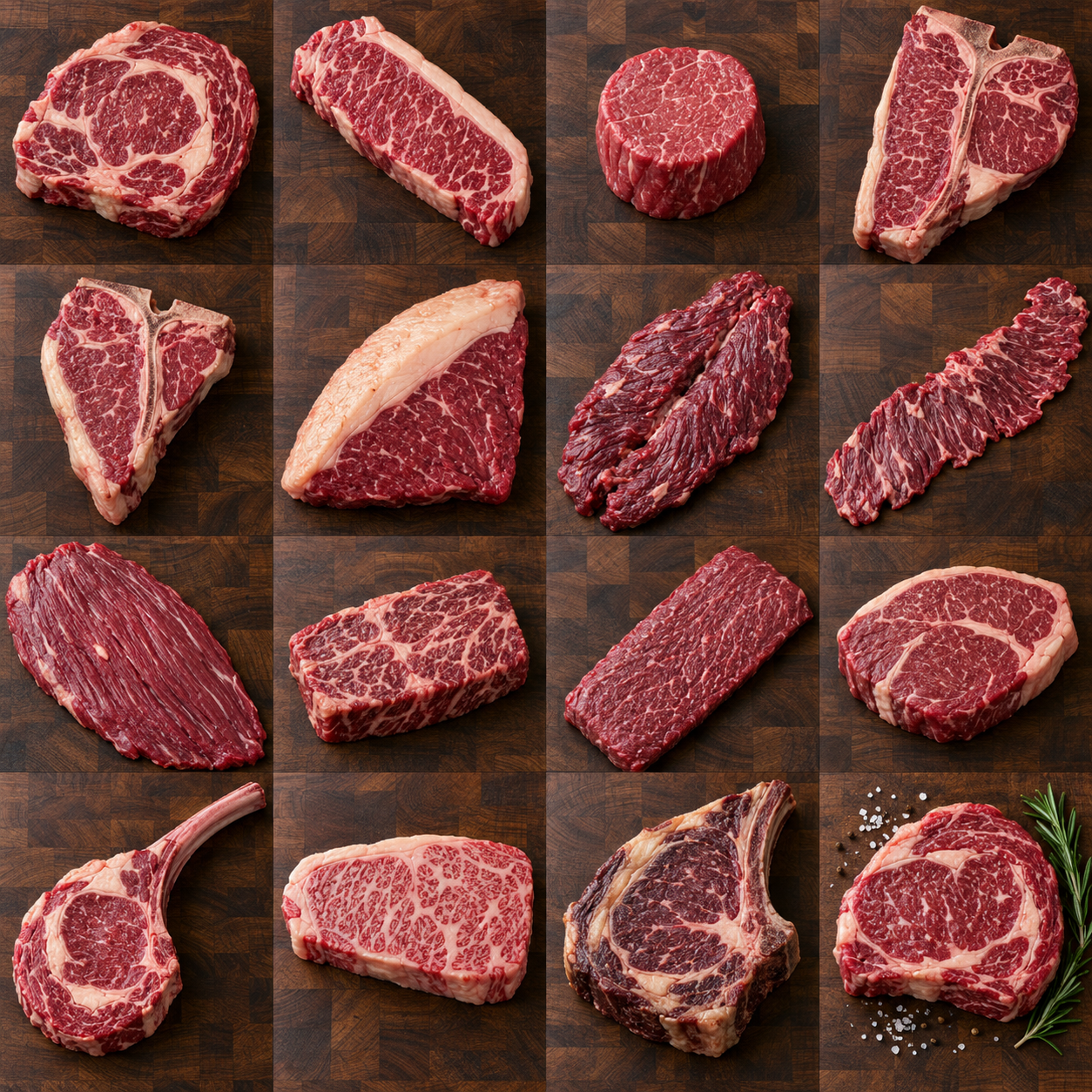
What the grade helps you compare
USDA quality grading gives buyers a common language for beef quality. Prime, Choice and Select help communicate differences in marbling and other grading factors. They do not replace the cut name, a useful thickness or a clear description of trimming.
Use grade as one part of the purchase. A tenderloin and a flank remain different muscles even if their grade is the same. Likewise, a thin Prime steak can still be a poor match for a recipe that expects a thick reverse-seared portion.
Prime, Choice and Select
| Grade | General distinction | Buying approach |
|---|---|---|
| Prime | Higher marbling within the grading framework | Inspect trim and choose a cut that benefits from the richer profile. |
| Choice | Less marbling than Prime; a broad range of steaks | Inspect the individual portion rather than treating all Choice beef as identical. |
| Select | Usually leaner, with less marbling than higher grades | Match the cut and cooking technique to a leaner eating experience. |
Marbling is not the outside fat cap
Marbling is fat distributed within the meat. A large strip of exterior fat, a thick picanha cap or a wide seam between ribeye muscles is not the same thing. When comparing two steaks, look inside the main muscle as well as around its edge.
If you like richness but dislike chewing large fat pieces, trimming and distribution may matter more than simply buying the highest grade. Ask to see the whole steak when possible rather than comparing only a promotional close-up.
What a grade does not tell you
A quality grade is not a complete account of how the animal was raised, the steak’s aging process, the seller’s shipping practices or whether you will enjoy that cut. Look for separate, specific information about those claims.
Do not treat a premium breed name, a restaurant adjective or a store’s private label as an automatic USDA grade. If USDA Prime is advertised, the product should be clearly identified as such. Vague terms such as prime quality can be ambiguous.
Put the label to work
Compare the same cut in similar portion sizes. Check the price per pound, actual thickness, bone and trim. For a steak dinner, an evenly cut portion you can control may be more useful than a thinner steak carrying a more expensive label.
At the counter, ask what changes between the two products you are considering. If the only answer is a marketing slogan, return to the measurable details. Once you cook the steak, keep notes on texture and marbling so your next purchase reflects your own preferences.