
Ribeye vs. New York Strip
Compare marbling, texture, flavor and the best cooking methods.
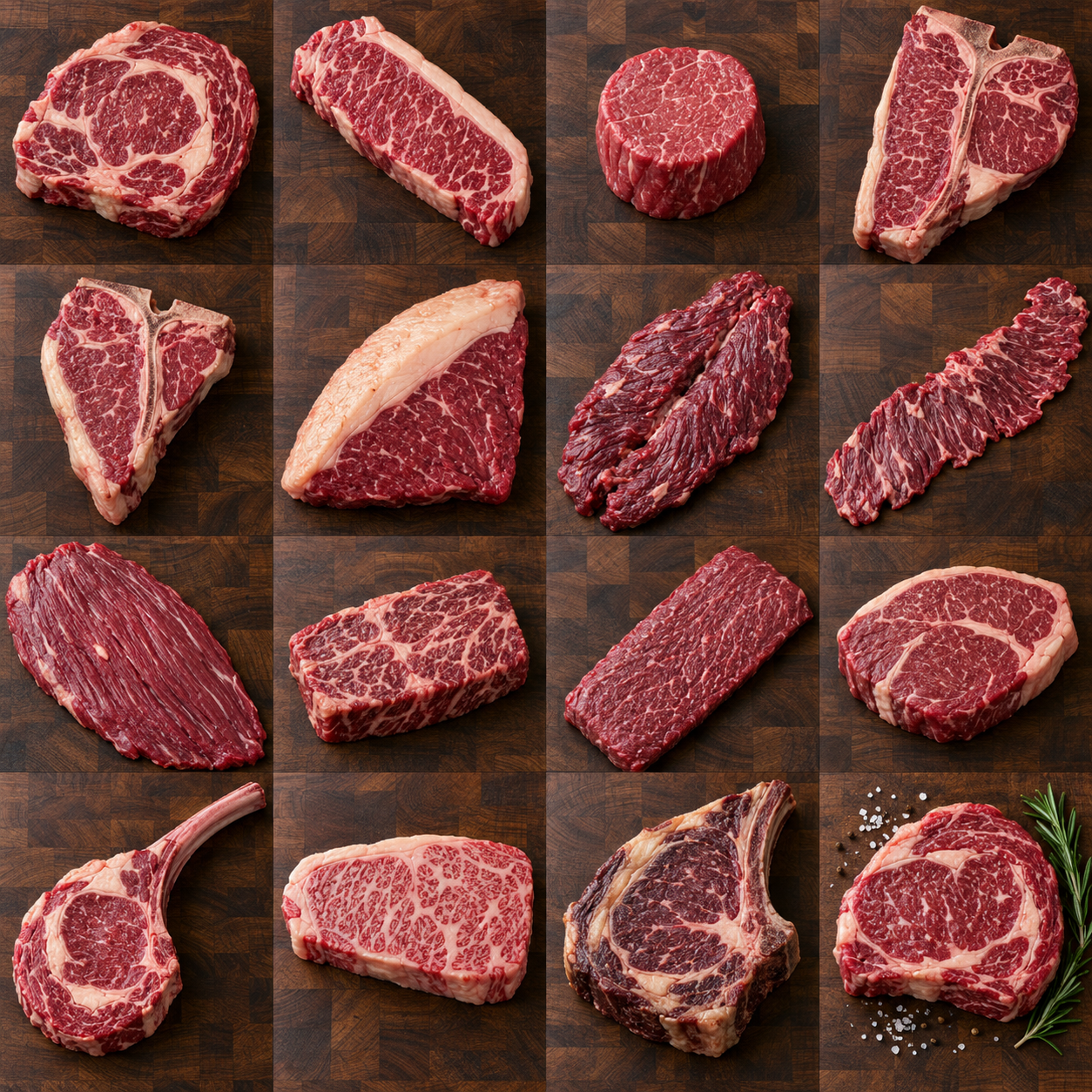
Choose by bite, not prestige
Ribeye and New York strip are both classic steak choices, but they are not interchangeable for someone who cares about fat distribution. Ribeye offers a cap, a central eye and more variation across the steak. Strip is often a more uniform main muscle with an outside fat edge. Neither is automatically better for every diner.
Side-by-side comparison
| Question | First option | Second option |
|---|---|---|
| Texture | A rich, varied bite with cap and fat seams | A firmer, more uniform steak bite |
| Fat distribution | Often generous marbling and seams | Marbling plus a recognizable outside fat edge |
| Cooking issue | Drippings and flare-ups on the grill | Managing the edge fat and even pan contact |
| Serving style | Good for sharing when carved and trimmed | Straightforward individual portions or slices |
Which should you choose?
Choose ribeye when you enjoy rich, fatty bites and are willing to trim or leave some fat. Choose strip when you want a more consistent texture across an individual steak. If you dislike exterior fat but enjoy marbling, inspect each piece instead of assuming the cut name answers the question.
Compare value fairly
Use the same grade, thickness and portion size when comparing prices. A heavily trimmed boneless strip and a large bone-in ribeye are not like-for-like purchases. Ask yourself how much usable meat each package gives you and whether the thicker option better suits your intended method.
Use a clear serving plan before ordering. Bone, heavy exterior fat, unusual portion sizes and shipping can distort a headline price. If possible, compare products on the same date and ask the seller for missing specifications.
How the choice changes cooking
Both cuts suit a grill or skillet. For a thick steak, a reverse sear can help control the center before browning. Keep ribeye away from persistent flare-ups and render strip’s edge carefully if needed. Measure the center rather than deciding based on a browned surface.
The name on the package does not establish the center temperature. Check doneness with a suitable thermometer and use the temperature chart to understand the culinary terms and separate safety guidance.