Ribeye Steak Guide
Rich marbling, deep beef flavor and forgiving cooking.
At a glance
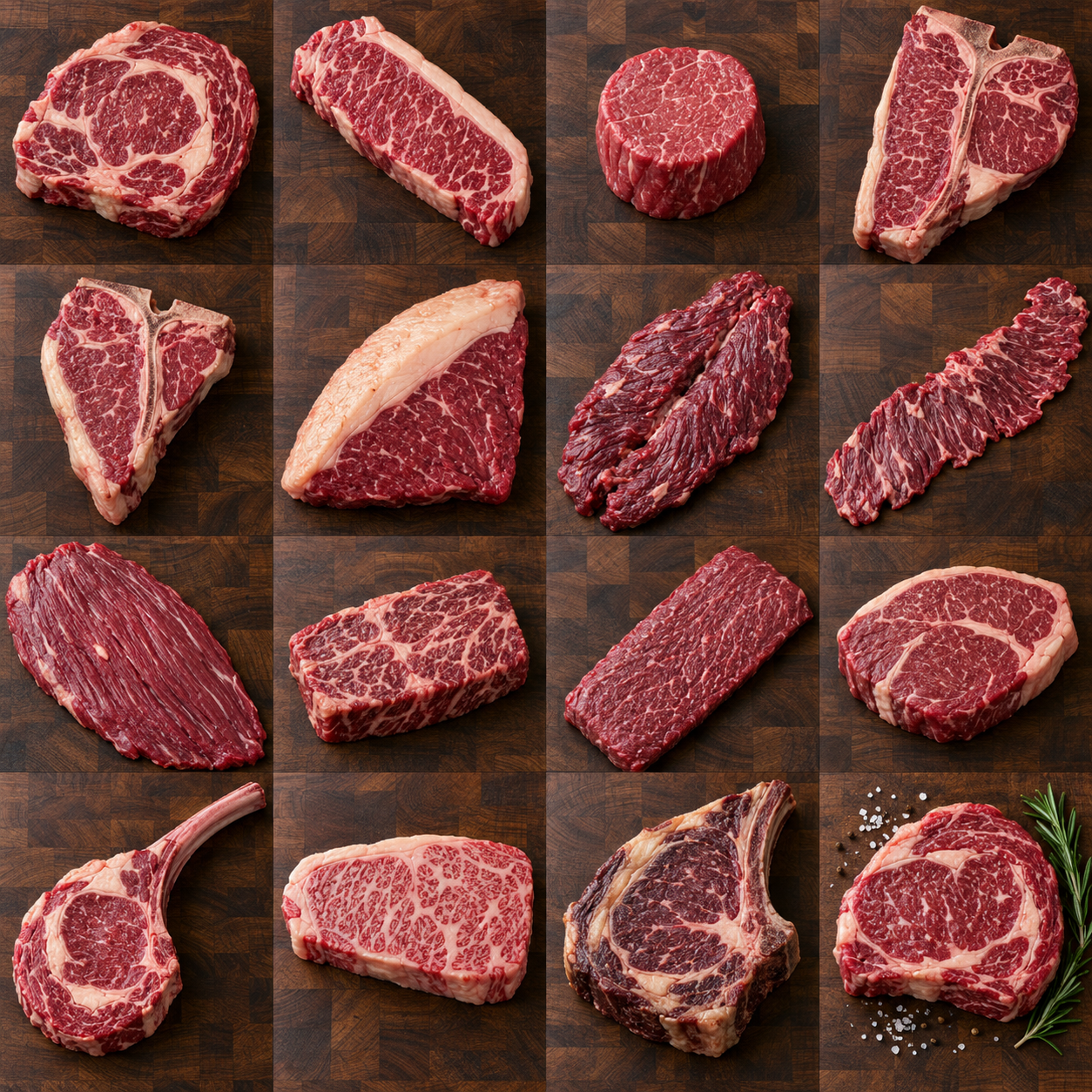
The central eye, outer cap and seams of fat give ribeye more variation from bite to bite than a filet. A large eye does not automatically make the best steak: compare the cap, marbling and fat seams as well as total weight. Bone-in and boneless versions can both be excellent; the bone changes presentation and usable yield.
Buying
Ask for a cut with a thickness that suits your method. Around an inch works for a direct pan cook; a thicker cut gives you more room for a reverse sear. If you dislike large fatty bites, choose a more evenly trimmed steak rather than assuming a lower USDA grade is the only solution.
Cooking
Dry the surface, season, and keep a cooler finishing zone available. Render the outside fat edge carefully with tongs, keeping your hands clear of splatter. A marbled ribeye can drip fat onto the grill, so move it away from flare-ups rather than letting flames blacken the surface.
Avoid this: A crisp crust can hide an overcooked center. Check temperature before adding butter or extending the sear. If the exterior is done first, move to gentler heat. Do not keep blasting the whole steak simply to soften one fat seam.
Check the center with a thermometer and use the doneness chart. Choose cast iron, grilling or reverse sear to suit the steak’s thickness.
Alternatives
Choose strip for a firmer, more uniform bite with less of ribeye’s cap-and-fat contrast. Read the New York strip guide and compare current prices for similar weight and trim.
Keep exploring
KNOW YOUR CUT. WEAR IT.