T-Bone Steak Guide
Classic bone-in steak combining strip with a smaller tenderloin portion.
At a glance
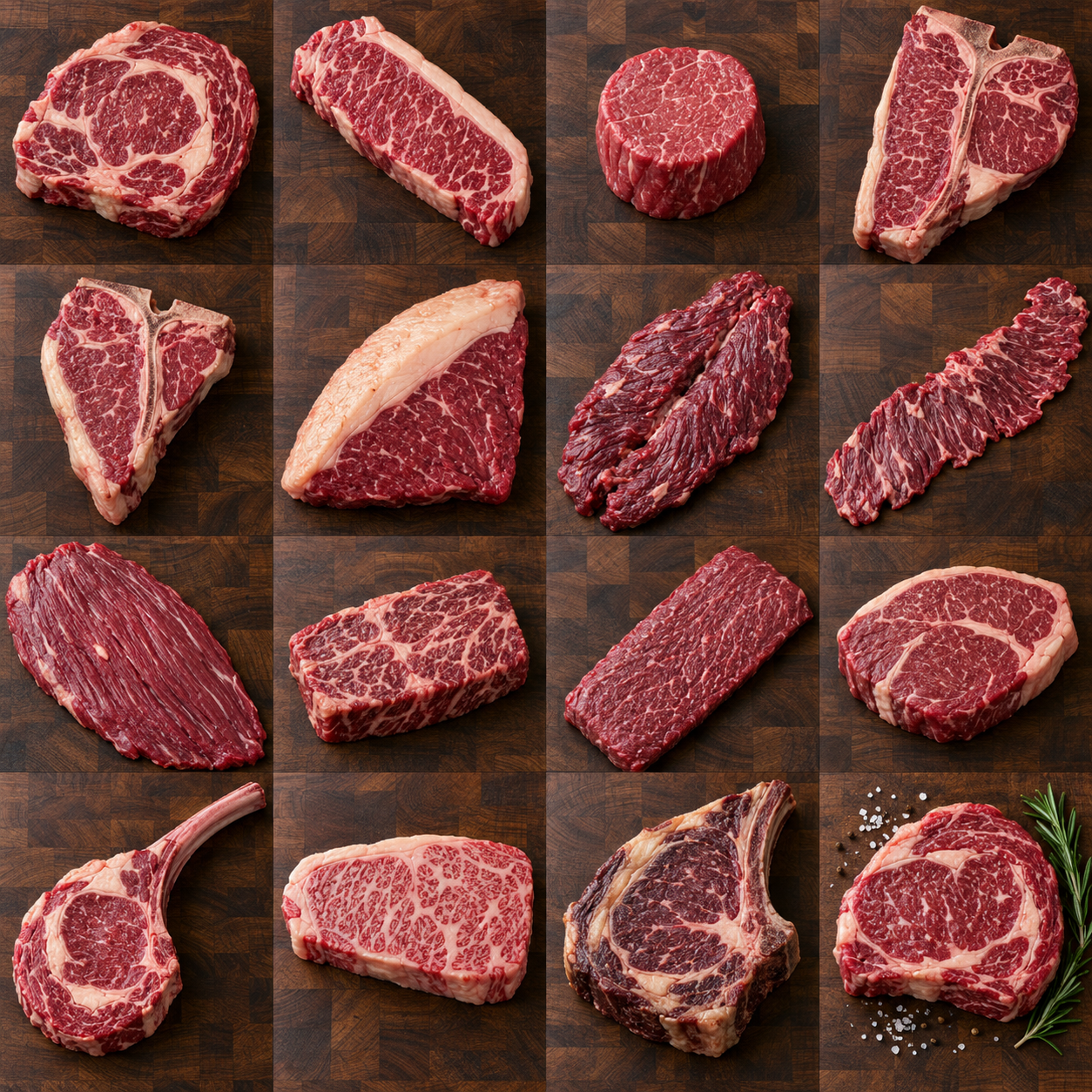
A T-bone contains strip and a smaller tenderloin portion separated by bone. It offers two textures in one steak, but the small tenderloin can cook more quickly than the larger strip side. Treat it as a combination cut rather than one uniform piece of meat.
Buying
Inspect the tenderloin portion instead of judging only the length of the bone. Compare price per pound alongside thickness and visible fat trim. A bargain-priced, very thin T-bone may be difficult to brown without overshooting its center.
Cooking
On a grill, keep a cooler zone ready and point the small tenderloin away from the strongest heat. In a pan, make sure the steak’s meat can contact the cooking surface rather than being held up by the bone. Check the strip and tenderloin separately.
Avoid this: Black grill marks do not establish doneness, and a temperature reading against the bone may mislead you. If one side is ready first, adjust the steak’s orientation. Remove the two muscles for slicing rather than fighting the T-shaped bone on each diner’s plate.
Check the center with a thermometer and use the doneness chart. Choose cast iron, grilling or reverse sear to suit the steak’s thickness.
Alternatives
Choose porterhouse when sharing a larger steak and a substantial tenderloin portion is the priority. Read the Porterhouse guide and compare current prices for similar weight and trim.
Keep exploring
KNOW YOUR CUT. WEAR IT.