New York Strip Guide
A balanced steak with a firm bite and concentrated beef flavor.
At a glance
Strip comes from the short loin and often has a recognizable outside fat edge. Its main muscle makes it relatively easy to portion into similar steaks. The bite is more structured than filet, with a different fat distribution from ribeye. A steak labeled strip loin, Kansas City strip or New York strip may be closely related, but bone and trimming still vary.
Buying
Inspect the whole steak rather than only its center. A thick band of external fat adds purchased weight without being the same as marbling. Ask the butcher about firm connective tissue at the end of the strip loin; a visible seam can create a chewy section.
Cooking
An evenly cut strip works well in cast iron or on a two-zone grill. Briefly hold the fat edge against the pan with tongs if needed, then cook the broad sides. For a thick steak, a reverse sear makes it easier to control the center before finishing the crust.
Avoid this: If a strip curls and loses contact with the pan, reduce the heat and reposition it rather than pressing continuously. Uneven thickness can create one overdone end. Slice for serving after checking the thickest section, and trim unwanted edge fat at the table.
Check the center with a thermometer and use the doneness chart. Choose cast iron, grilling or reverse sear to suit the steak’s thickness.
Alternatives
Choose ribeye if rich marbling and a softer, fattier cap matter more than a uniform bite. Read the Ribeye guide and compare current prices for similar weight and trim.
Keep exploring
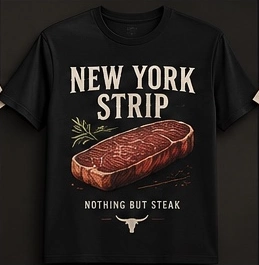
KNOW YOUR CUT. WEAR IT.