
Best Pans for Cooking Steak
Cast iron, carbon steel and stainless each have different strengths.
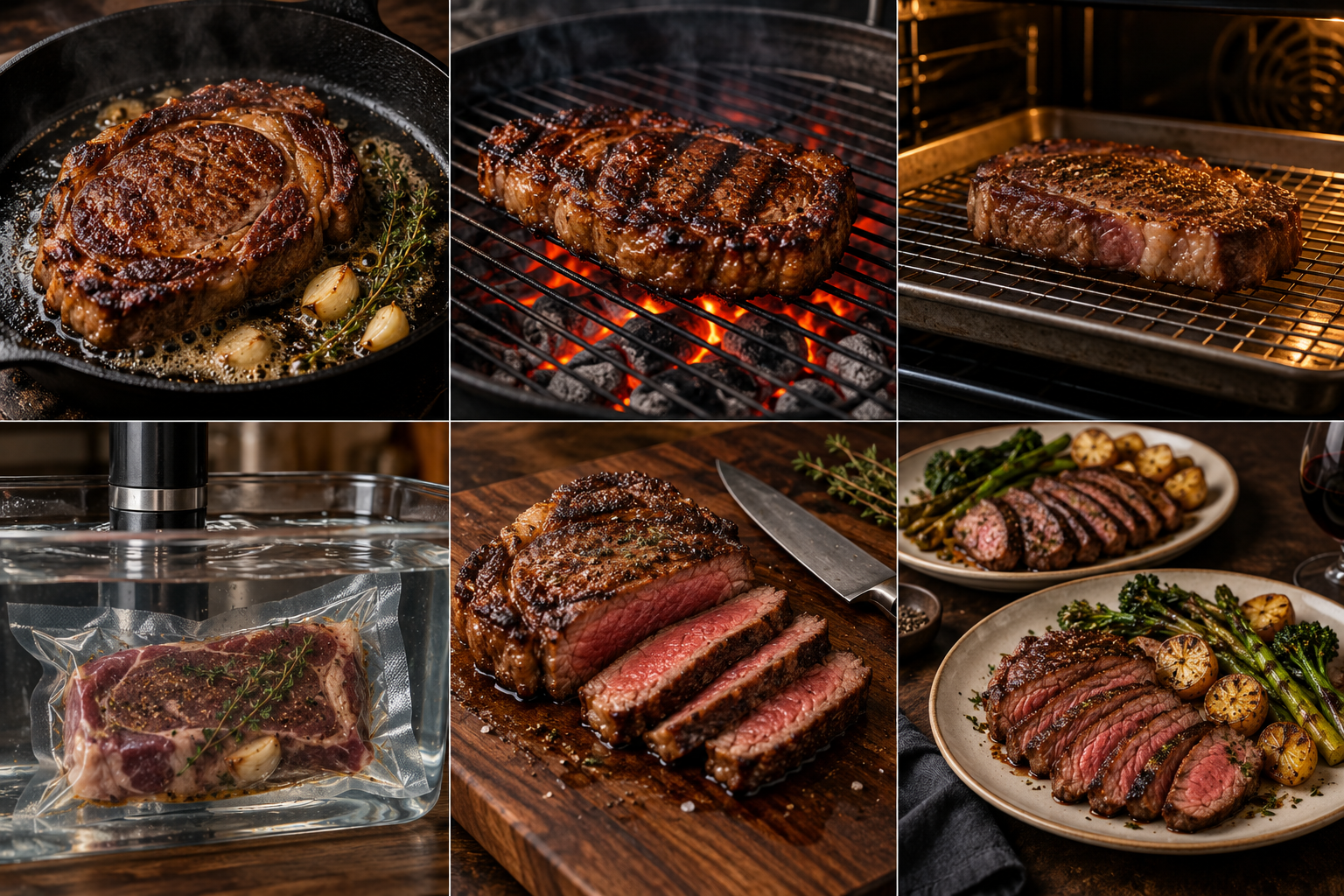
Choose a surface, then learn its behavior
Cast iron, carbon steel and stainless steel can all cook excellent steak. Their differences affect weight, heat response and cleaning more than whether steak is possible. Choose a pan that fits your stove and your typical portions, then learn where it heats unevenly.
Compare the main options
Cast iron is heavy and can hold useful heat for a sear. It heats slowly enough that deliberate preheating matters. Seasoning and careful drying are part of ownership.
Carbon steel is often lighter and can respond more quickly, although construction varies. It also commonly requires seasoning, and it may develop a changing patina with use.
Stainless steel is useful for pan sauces and often tolerates acidic ingredients well. Allow browning to develop before trying to release stuck meat; do not confuse early sticking with a failed pan.
Buying checklist
| Feature | Look for | Avoid assuming |
|---|---|---|
| Pan size | Enough flat cooking area for the steak. | Nominal rim diameter is not the usable base diameter. |
| Stove compatibility | Flat base and the correct compatibility for your burner. | A warped base can reduce contact on some cooktops. |
| Oven use | Verified oven-safe pan and handle limits. | The handle or lid may have a lower limit than the body. |
| Weight | Easy to move safely when hot. | A pan you struggle to lift is not a practical upgrade. |
| Maintenance | Seasoning, cleaning and drying routine you will follow. | Dishwasher convenience varies by material and manufacturer. |
Use it well
A grill pan leaves raised marks but reduces full-surface contact compared with a flat skillet. If a continuous crust is your priority, a flat cooking surface is often simpler. Cook in batches instead of trying to fit two large steaks onto an undersized base.
Care and ownership
Use ventilation and heat gradually. Avoid thermal shock and respect the maker’s temperature guidance. Nonstick cookware generally has different heat limits and is not the first tool to choose for aggressive high-heat searing; do not heat it empty beyond its stated limits.
Before buying, read the current specifications and warranty from the manufacturer. Compare total cost, including accessories or replacement components you actually need. A discount is useful only if the tool suits your cooking routine.
How this guide handles recommendations
This is a category buying guide, not a hands-on product test or a ranked list of products we have used. It does not claim a best model or a confirmed affiliate relationship. Named product comparisons can be added when current specifications and an honest testing basis are available.